
Case study
View all

Experian asked me to reimagine their consumer product experience and create a North Star for future digital design.
The challenge
Experian’s consumer products are used by millions of people to understand their finances, improve their credit score and access financial services.
The challenge was to move the experience beyond reporting and monitoring, towards something more useful, proactive and confidence-building. The product needed to feel clearer, more engaging and more expert, while giving internal teams a strong direction for future design work.
My project role
I led the design work across discovery, concept development, brand direction, UX, UI and prototyping.
I ran stakeholder interviews and workshops, mapped key journeys, defined UX principles, created a new visual and interaction language, and developed a high-fidelity prototype and design system that could act as a reference point for Experian’s internal teams.
Activities
View all

Stakeholder interviews
User journey mapping
Workshop facilitation
Creative direction
User experience design
Product design
User interface design
Rapid prototyping
Design systems
Understanding the current experience
View all
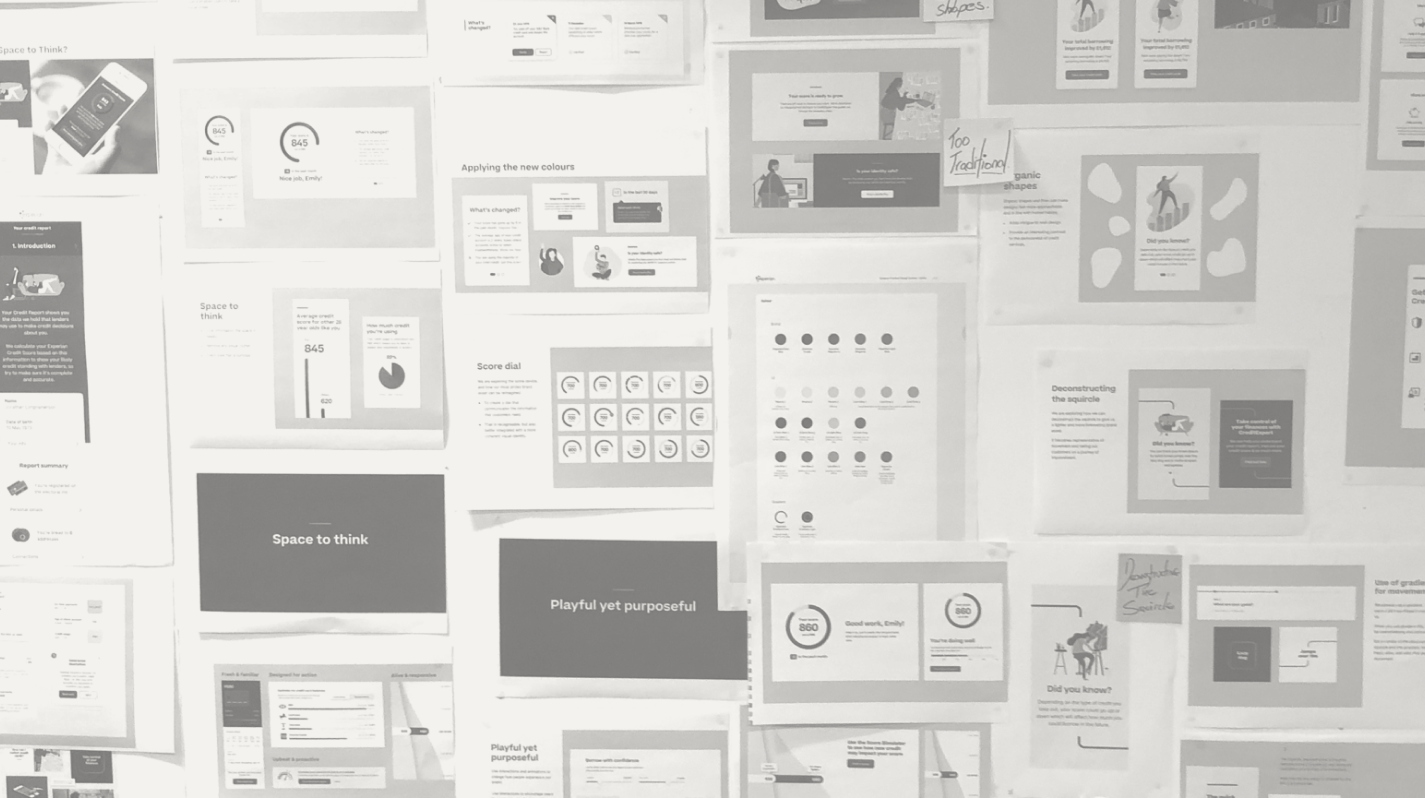
I started by reviewing the existing product experience to understand how people were being guided through their credit information, where the product felt useful, and where it became passive or hard to act on.
The work showed that the experience was strong on reporting, but less strong on helping users understand what the information meant or what they could do next.
This gave us a clearer view of the opportunity: not to replace the value of the credit report, but to build around it with more context, guidance and confidence.
Defining the product shift
View all
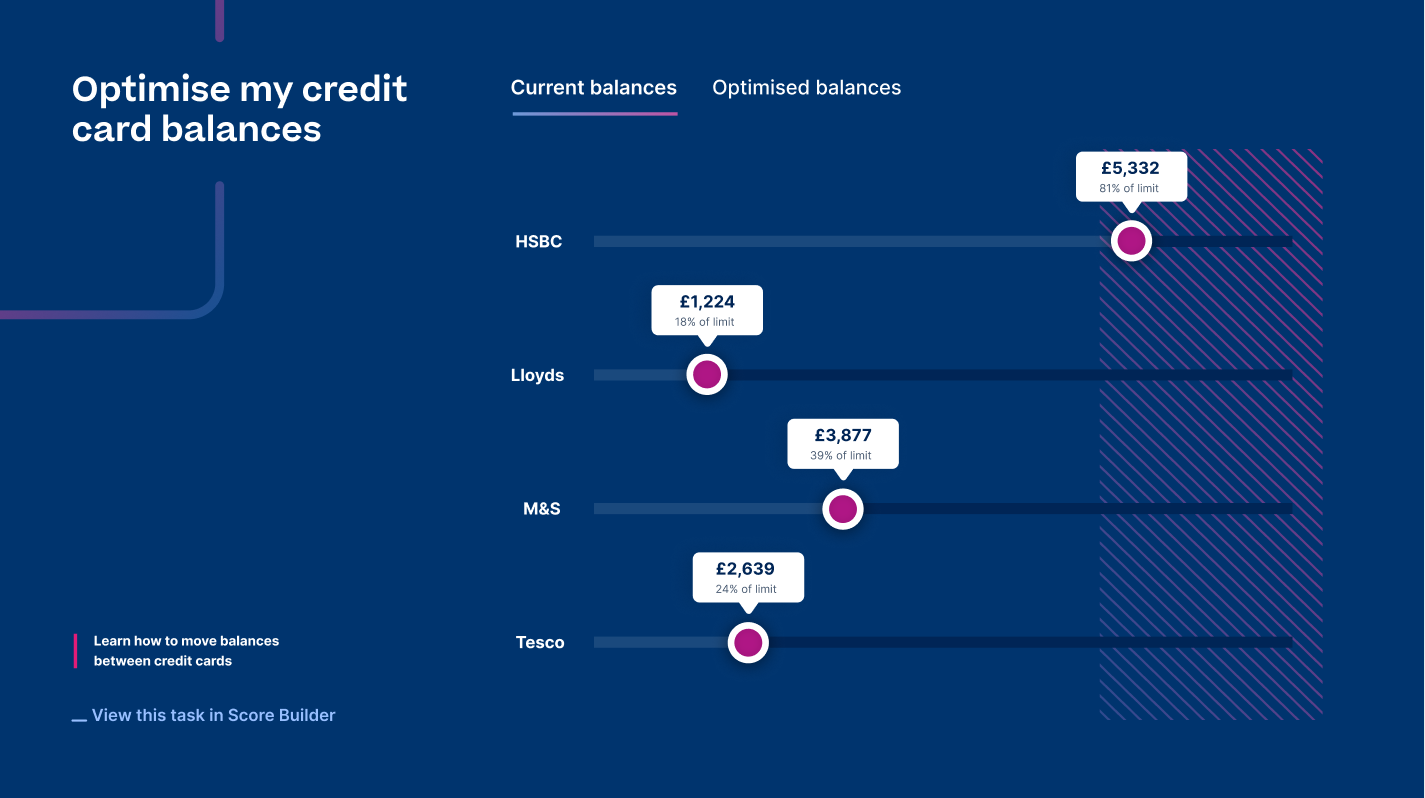
A key part of the work was defining the shift the product needed to make.
The experience needed to move from formal, passive and report-led, towards something more proactive, helpful and confidence-building. Users still needed the authority of Experian, but they also needed clearer guidance, warmer communication and more useful next steps.
This shift became the basis for the design direction, helping us judge each idea by whether it made the product feel more understandable, useful and action-oriented.
Turning insight into action
View all
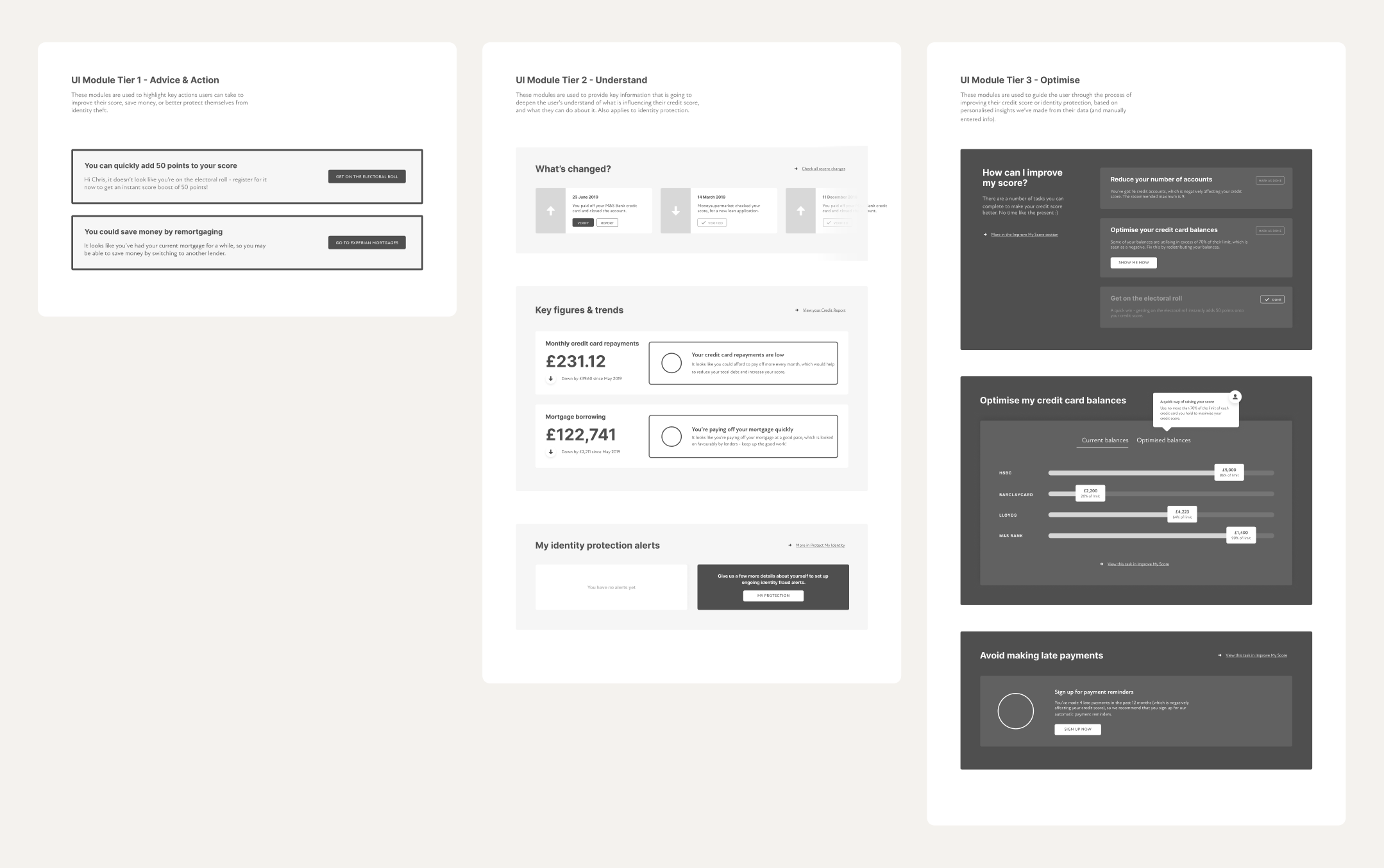
To make the experience more useful, we developed a system of advice and guidance modules that could respond to different user needs.
Some modules helped explain changes, some highlighted opportunities, and others encouraged users to take specific actions that could improve their financial position over time.
The aim was to make guidance feel timely and relevant, rather than buried in the experience or presented as generic financial advice.
Creating a warmer product language
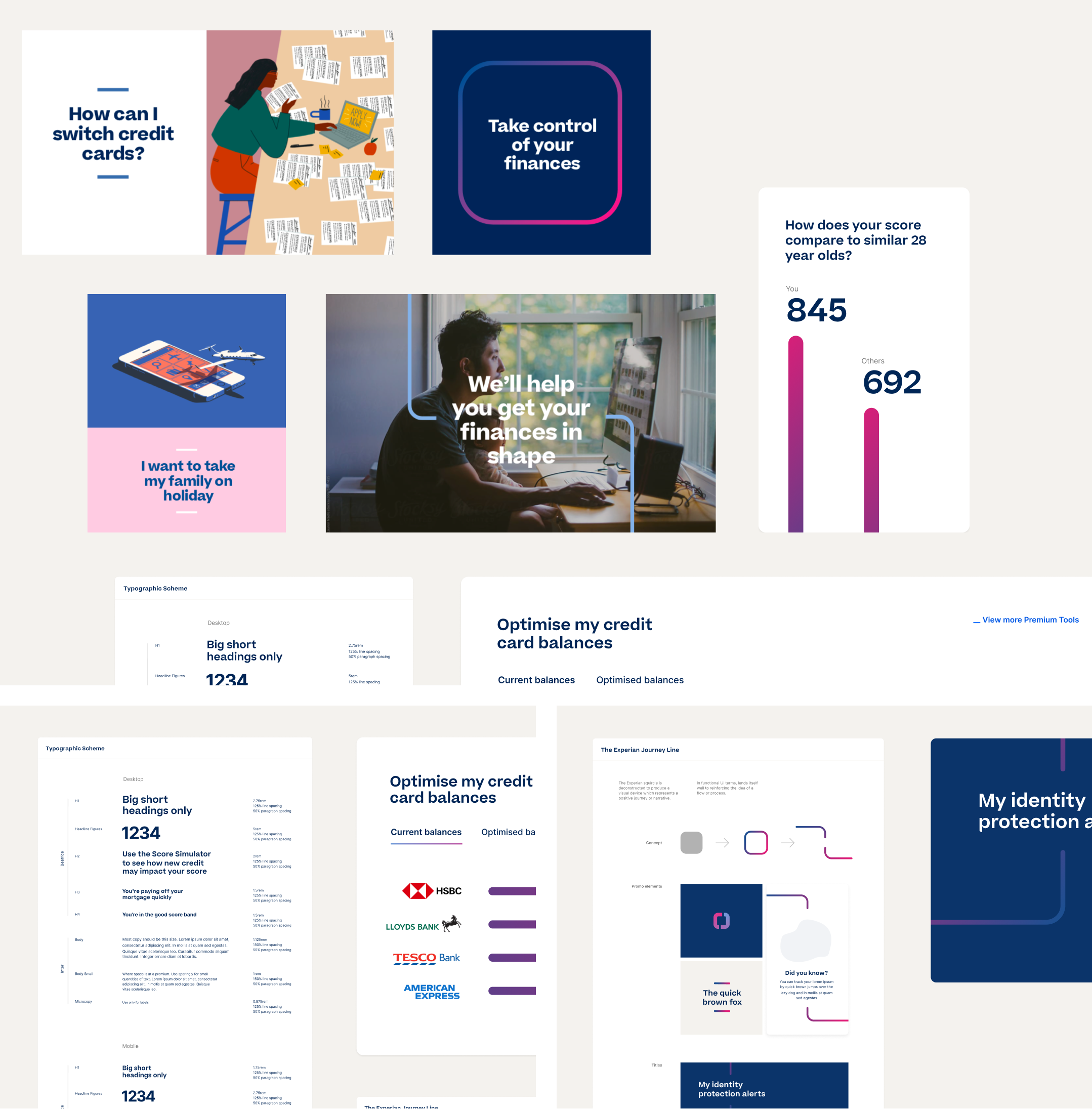
Alongside the UX work, I explored how Experian’s brand could come through more clearly in-product.
The direction introduced a warmer, more confident visual and interaction language, helping the experience feel more engaging and supportive while still retaining the credibility people expect from a major financial brand.
This included a more expressive use of colour, clearer hierarchy, friendlier content patterns and interface details that made the product feel less transactional and more supportive.
Building the North Star prototype
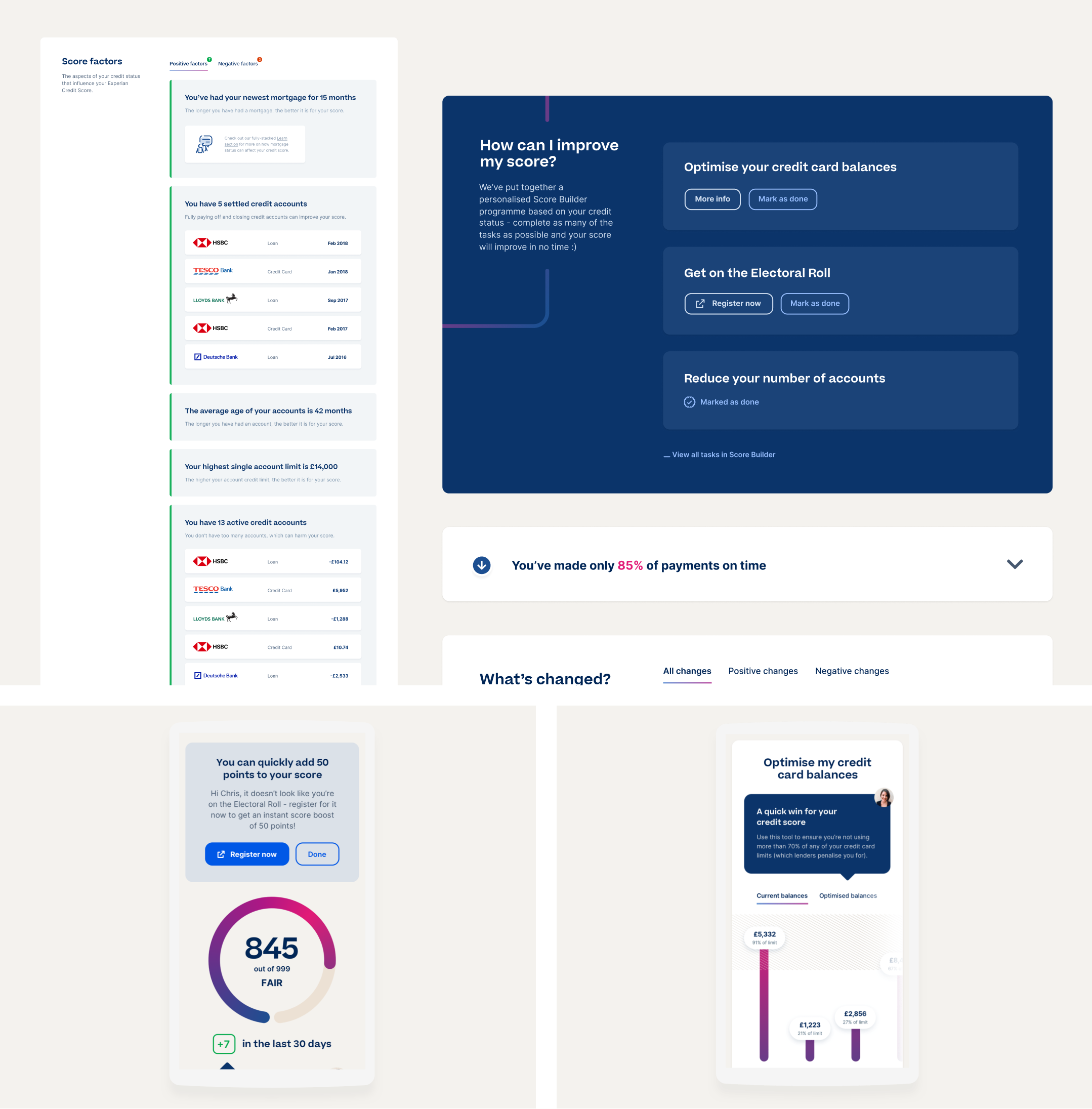
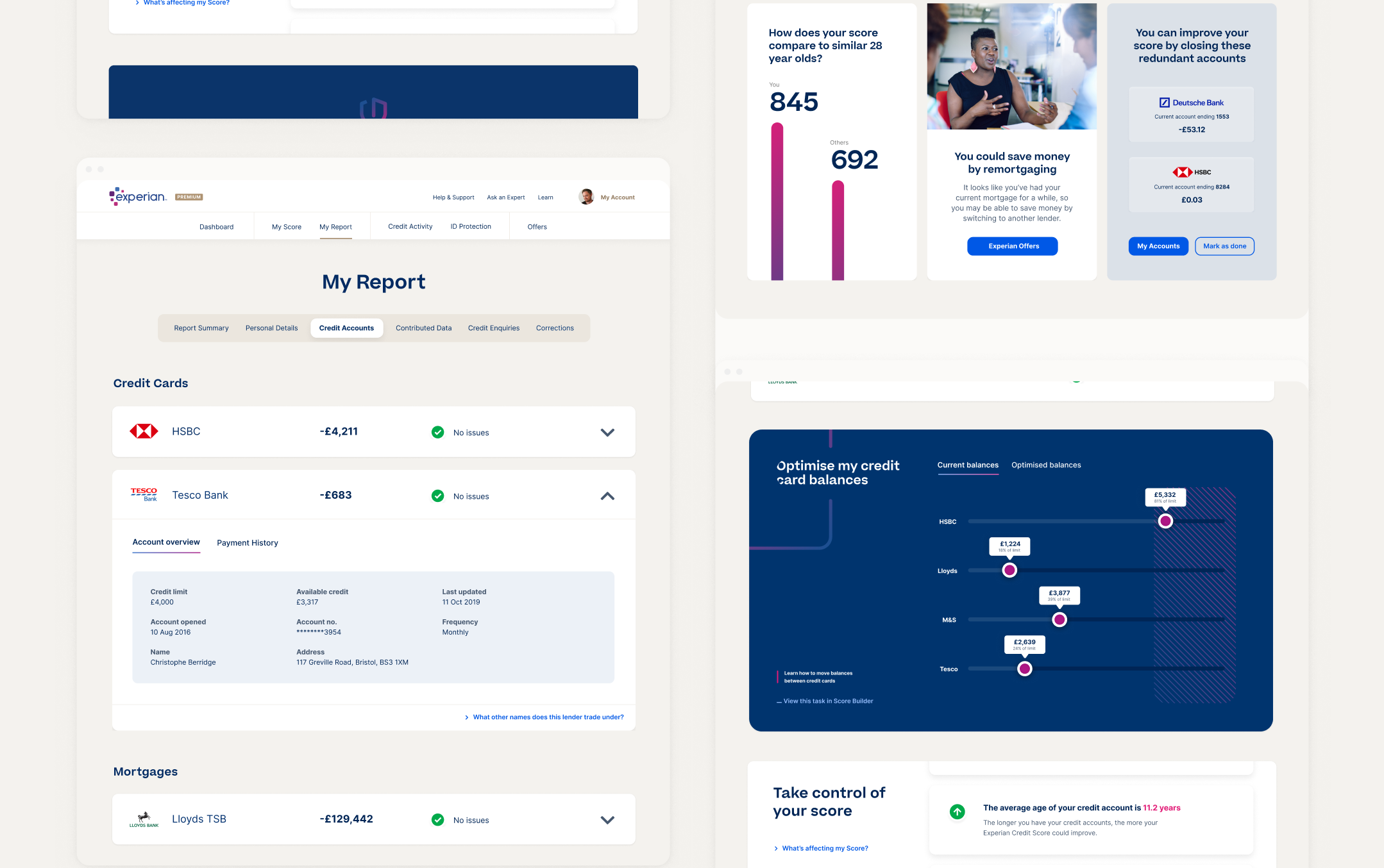
Once the direction was clear, I created a high-fidelity prototype showing how the future Credit Expert experience could work across key screens and journeys.
The prototype brought together the new UX model, visual language, content approach and interaction patterns, making the vision tangible enough for teams to review, share and build from.
It also helped move conversations away from abstract strategy and into something people could see, test, challenge and align around.
Sharing the vision across the business
The final work was shared widely across Experian, including at internal conferences and all-hands sessions.
It helped align teams around a clearer, more user-centred direction for the product, showing how Experian could move from credit reporting towards more proactive financial guidance.
The work gave teams a practical reference point for future product decisions, helping the direction live beyond the initial concept and influence how Experian thought about its digital experience.
Get in touch
View all
I’m available via chris@chrisberridge.com or LinkedIn.
Case study
View all
Experian asked me to reimagine their consumer product experience and create a North Star for future digital design.
The challenge
Experian’s consumer products are used by millions of people to understand their finances, improve their credit score and access financial services.
The challenge was to move the experience beyond reporting and monitoring, towards something more useful, proactive and confidence-building. The product needed to feel clearer, more engaging and more expert, while giving internal teams a strong direction for future design work.
My project role
I led the design work across discovery, concept development, brand direction, UX, UI and prototyping.
I ran stakeholder interviews and workshops, mapped key journeys, defined UX principles, created a new visual and interaction language, and developed a high-fidelity prototype and design system that could act as a reference point for Experian’s internal teams.
Activities
View all
Stakeholder interviews
User journey mapping
Workshop facilitation
Creative direction
User experience design
Product design
User interface design
Rapid prototyping
Design systems
Understanding the current experience
View all
I started by reviewing the existing product experience to understand how people were being guided through their credit information, where the product felt useful, and where it became passive or hard to act on.
The work showed that the experience was strong on reporting, but less strong on helping users understand what the information meant or what they could do next.
This gave us a clearer view of the opportunity: not to replace the value of the credit report, but to build around it with more context, guidance and confidence.
Defining the product shift
View all
A key part of the work was defining the shift the product needed to make.
The experience needed to move from formal, passive and report-led, towards something more proactive, helpful and confidence-building. Users still needed the authority of Experian, but they also needed clearer guidance, warmer communication and more useful next steps.
This shift became the basis for the design direction, helping us judge each idea by whether it made the product feel more understandable, useful and action-oriented.
Turning insight into action
View all
To make the experience more useful, we developed a system of advice and guidance modules that could respond to different user needs.
Some modules helped explain changes, some highlighted opportunities, and others encouraged users to take specific actions that could improve their financial position over time.
The aim was to make guidance feel timely and relevant, rather than buried in the experience or presented as generic financial advice.
Creating a warmer product language
Alongside the UX work, I explored how Experian’s brand could come through more clearly in-product.
The direction introduced a warmer, more confident visual and interaction language, helping the experience feel more engaging and supportive while still retaining the credibility people expect from a major financial brand.
This included a more expressive use of colour, clearer hierarchy, friendlier content patterns and interface details that made the product feel less transactional and more supportive.
Building the North Star prototype
View all
Once the direction was clear, I created a high-fidelity prototype showing how the future Credit Expert experience could work across key screens and journeys.
The prototype brought together the new UX model, visual language, content approach and interaction patterns, making the vision tangible enough for teams to review, share and build from.
It also helped move conversations away from abstract strategy and into something people could see, test, challenge and align around.
Sharing the vision across the business
View all
The final work was shared widely across Experian, including at internal conferences and all-hands sessions.
It helped align teams around a clearer, more user-centred direction for the product, showing how Experian could move from credit reporting towards more proactive financial guidance.
The work gave teams a practical reference point for future product decisions, helping the direction live beyond the initial concept and influence how Experian thought about its digital experience.
Get in touch
View all
I’m available via chris@chrisberridge.com or LinkedIn.


Case study
View all
Experian asked me to reimagine their consumer product experience and create a North Star for future digital design.
The challenge
Experian’s consumer products are used by millions of people to understand their finances, improve their credit score and access financial services.
The challenge was to move the experience beyond reporting and monitoring, towards something more useful, proactive and confidence-building. The product needed to feel clearer, more engaging and more expert, while giving internal teams a strong direction for future design work.
My project role
I led the design work across discovery, concept development, brand direction, UX, UI and prototyping.
I ran stakeholder interviews and workshops, mapped key journeys, defined UX principles, created a new visual and interaction language, and developed a high-fidelity prototype and design system that could act as a reference point for Experian’s internal teams.
Activities
View all
Stakeholder interviews
User journey mapping
Workshop facilitation
Creative direction
User experience design
Product design
User interface design
Rapid prototyping
Design systems
Understanding the current experience
View all
I started by reviewing the existing product experience to understand how people were being guided through their credit information, where the product felt useful, and where it became passive or hard to act on.
The work showed that the experience was strong on reporting, but less strong on helping users understand what the information meant or what they could do next.
This gave us a clearer view of the opportunity: not to replace the value of the credit report, but to build around it with more context, guidance and confidence.
Defining the product shift
View all
A key part of the work was defining the shift the product needed to make.
The experience needed to move from formal, passive and report-led, towards something more proactive, helpful and confidence-building. Users still needed the authority of Experian, but they also needed clearer guidance, warmer communication and more useful next steps.
This shift became the basis for the design direction, helping us judge each idea by whether it made the product feel more understandable, useful and action-oriented.
Turning insight into action
View all
To make the experience more useful, we developed a system of advice and guidance modules that could respond to different user needs.
Some modules helped explain changes, some highlighted opportunities, and others encouraged users to take specific actions that could improve their financial position over time.
The aim was to make guidance feel timely and relevant, rather than buried in the experience or presented as generic financial advice.
Creating a warmer product language
Alongside the UX work, I explored how Experian’s brand could come through more clearly in-product.
The direction introduced a warmer, more confident visual and interaction language, helping the experience feel more engaging and supportive while still retaining the credibility people expect from a major financial brand.
This included a more expressive use of colour, clearer hierarchy, friendlier content patterns and interface details that made the product feel less transactional and more supportive.
Building the North Star prototype
View all
Once the direction was clear, I created a high-fidelity prototype showing how the future Credit Expert experience could work across key screens and journeys.
The prototype brought together the new UX model, visual language, content approach and interaction patterns, making the vision tangible enough for teams to review, share and build from.
It also helped move conversations away from abstract strategy and into something people could see, test, challenge and align around.
Sharing the vision across the business
View all
The final work was shared widely across Experian, including at internal conferences and all-hands sessions.
It helped align teams around a clearer, more user-centred direction for the product, showing how Experian could move from credit reporting towards more proactive financial guidance.
The work gave teams a practical reference point for future product decisions, helping the direction live beyond the initial concept and influence how Experian thought about its digital experience.
Get in touch
View all
I’m available via chris@chrisberridge.com or LinkedIn.
Case study
View all
Experian asked me to reimagine their consumer product experience and create a North Star for future digital design.
The challenge
Experian’s consumer products are used by millions of people to understand their finances, improve their credit score and access financial services.
The challenge was to move the experience beyond reporting and monitoring, towards something more useful, proactive and confidence-building. The product needed to feel clearer, more engaging and more expert, while giving internal teams a strong direction for future design work.
My project role
I led the design work across discovery, concept development, brand direction, UX, UI and prototyping.
I ran stakeholder interviews and workshops, mapped key journeys, defined UX principles, created a new visual and interaction language, and developed a high-fidelity prototype and design system that could act as a reference point for Experian’s internal teams.
Activities
View all
Stakeholder interviews
User journey mapping
Workshop facilitation
Creative direction
User experience design
Product design
User interface design
Rapid prototyping
Design systems
Understanding the current experience
View all
I started by reviewing the existing product experience to understand how people were being guided through their credit information, where the product felt useful, and where it became passive or hard to act on.
The work showed that the experience was strong on reporting, but less strong on helping users understand what the information meant or what they could do next.
This gave us a clearer view of the opportunity: not to replace the value of the credit report, but to build around it with more context, guidance and confidence.
Defining the product shift
View all
A key part of the work was defining the shift the product needed to make.
The experience needed to move from formal, passive and report-led, towards something more proactive, helpful and confidence-building. Users still needed the authority of Experian, but they also needed clearer guidance, warmer communication and more useful next steps.
This shift became the basis for the design direction, helping us judge each idea by whether it made the product feel more understandable, useful and action-oriented.
Turning insight into action
View all
To make the experience more useful, we developed a system of advice and guidance modules that could respond to different user needs.
Some modules helped explain changes, some highlighted opportunities, and others encouraged users to take specific actions that could improve their financial position over time.
The aim was to make guidance feel timely and relevant, rather than buried in the experience or presented as generic financial advice.
Creating a warmer product language
Alongside the UX work, I explored how Experian’s brand could come through more clearly in-product.
The direction introduced a warmer, more confident visual and interaction language, helping the experience feel more engaging and supportive while still retaining the credibility people expect from a major financial brand.
This included a more expressive use of colour, clearer hierarchy, friendlier content patterns and interface details that made the product feel less transactional and more supportive.
Building the North Star prototype
View all
Once the direction was clear, I created a high-fidelity prototype showing how the future Credit Expert experience could work across key screens and journeys.
The prototype brought together the new UX model, visual language, content approach and interaction patterns, making the vision tangible enough for teams to review, share and build from.
It also helped move conversations away from abstract strategy and into something people could see, test, challenge and align around.
Sharing the vision across the business
View all
The final work was shared widely across Experian, including at internal conferences and all-hands sessions.
It helped align teams around a clearer, more user-centred direction for the product, showing how Experian could move from credit reporting towards more proactive financial guidance.
The work gave teams a practical reference point for future product decisions, helping the direction live beyond the initial concept and influence how Experian thought about its digital experience.
Get in touch
View all
I’m available via chris@chrisberridge.com or LinkedIn.
Case study
View all
Experian asked me to reimagine their consumer product experience and create a North Star for future digital design.
The challenge
Experian’s consumer products are used by millions of people to understand their finances, improve their credit score and access financial services.
The challenge was to move the experience beyond reporting and monitoring, towards something more useful, proactive and confidence-building. The product needed to feel clearer, more engaging and more expert, while giving internal teams a strong direction for future design work.
My project role
I led the design work across discovery, concept development, brand direction, UX, UI and prototyping.
I ran stakeholder interviews and workshops, mapped key journeys, defined UX principles, created a new visual and interaction language, and developed a high-fidelity prototype and design system that could act as a reference point for Experian’s internal teams.
Activities
View all
Stakeholder interviews
User journey mapping
Workshop facilitation
Creative direction
User experience design
Product design
User interface design
Rapid prototyping
Design systems
Understanding the current experience
View all
I started by reviewing the existing product experience to understand how people were being guided through their credit information, where the product felt useful, and where it became passive or hard to act on.
The work showed that the experience was strong on reporting, but less strong on helping users understand what the information meant or what they could do next.
This gave us a clearer view of the opportunity: not to replace the value of the credit report, but to build around it with more context, guidance and confidence.
Defining the product shift
View all
A key part of the work was defining the shift the product needed to make.
The experience needed to move from formal, passive and report-led, towards something more proactive, helpful and confidence-building. Users still needed the authority of Experian, but they also needed clearer guidance, warmer communication and more useful next steps.
This shift became the basis for the design direction, helping us judge each idea by whether it made the product feel more understandable, useful and action-oriented.
Turning insight into action
View all
To make the experience more useful, we developed a system of advice and guidance modules that could respond to different user needs.
Some modules helped explain changes, some highlighted opportunities, and others encouraged users to take specific actions that could improve their financial position over time.
The aim was to make guidance feel timely and relevant, rather than buried in the experience or presented as generic financial advice.
Creating a warmer product language
Alongside the UX work, I explored how Experian’s brand could come through more clearly in-product.
The direction introduced a warmer, more confident visual and interaction language, helping the experience feel more engaging and supportive while still retaining the credibility people expect from a major financial brand.
This included a more expressive use of colour, clearer hierarchy, friendlier content patterns and interface details that made the product feel less transactional and more supportive.
Building the North Star prototype
View all
Once the direction was clear, I created a high-fidelity prototype showing how the future Credit Expert experience could work across key screens and journeys.
The prototype brought together the new UX model, visual language, content approach and interaction patterns, making the vision tangible enough for teams to review, share and build from.
It also helped move conversations away from abstract strategy and into something people could see, test, challenge and align around.
Sharing the vision across the business
View all
The final work was shared widely across Experian, including at internal conferences and all-hands sessions.
It helped align teams around a clearer, more user-centred direction for the product, showing how Experian could move from credit reporting towards more proactive financial guidance.
The work gave teams a practical reference point for future product decisions, helping the direction live beyond the initial concept and influence how Experian thought about its digital experience.
Get in touch
View all
I’m available via chris@chrisberridge.com or LinkedIn.


Case study
View all
Experian asked me to reimagine their consumer product experience and create a North Star for future digital design.
The challenge
Experian’s consumer products are used by millions of people to understand their finances, improve their credit score and access financial services.
The challenge was to move the experience beyond reporting and monitoring, towards something more useful, proactive and confidence-building. The product needed to feel clearer, more engaging and more expert, while giving internal teams a strong direction for future design work.
My project role
I led the design work across discovery, concept development, brand direction, UX, UI and prototyping.
I ran stakeholder interviews and workshops, mapped key journeys, defined UX principles, created a new visual and interaction language, and developed a high-fidelity prototype and design system that could act as a reference point for Experian’s internal teams.
Activities
View all
Stakeholder interviews
User journey mapping
Workshop facilitation
Creative direction
User experience design
Product design
User interface design
Rapid prototyping
Design systems
Understanding the current experience
View all
I started by reviewing the existing product experience to understand how people were being guided through their credit information, where the product felt useful, and where it became passive or hard to act on.
The work showed that the experience was strong on reporting, but less strong on helping users understand what the information meant or what they could do next.
This gave us a clearer view of the opportunity: not to replace the value of the credit report, but to build around it with more context, guidance and confidence.
Defining the product shift
View all
A key part of the work was defining the shift the product needed to make.
The experience needed to move from formal, passive and report-led, towards something more proactive, helpful and confidence-building. Users still needed the authority of Experian, but they also needed clearer guidance, warmer communication and more useful next steps.
This shift became the basis for the design direction, helping us judge each idea by whether it made the product feel more understandable, useful and action-oriented.
Turning insight into action
View all
To make the experience more useful, we developed a system of advice and guidance modules that could respond to different user needs.
Some modules helped explain changes, some highlighted opportunities, and others encouraged users to take specific actions that could improve their financial position over time.
The aim was to make guidance feel timely and relevant, rather than buried in the experience or presented as generic financial advice.
Creating a warmer product language
Alongside the UX work, I explored how Experian’s brand could come through more clearly in-product.
The direction introduced a warmer, more confident visual and interaction language, helping the experience feel more engaging and supportive while still retaining the credibility people expect from a major financial brand.
This included a more expressive use of colour, clearer hierarchy, friendlier content patterns and interface details that made the product feel less transactional and more supportive.
Building the North Star prototype
View all
Once the direction was clear, I created a high-fidelity prototype showing how the future Credit Expert experience could work across key screens and journeys.
The prototype brought together the new UX model, visual language, content approach and interaction patterns, making the vision tangible enough for teams to review, share and build from.
It also helped move conversations away from abstract strategy and into something people could see, test, challenge and align around.
Sharing the vision across the business
View all
The final work was shared widely across Experian, including at internal conferences and all-hands sessions.
It helped align teams around a clearer, more user-centred direction for the product, showing how Experian could move from credit reporting towards more proactive financial guidance.
The work gave teams a practical reference point for future product decisions, helping the direction live beyond the initial concept and influence how Experian thought about its digital experience.
Get in touch
View all
I’m available via chris@chrisberridge.com or LinkedIn.